
 The Chicago Field Guide
Body. Soul. Your pace.
Movement, good food, quieter nights and private support when you want it.
Explore Health & Soul ↗
The edit / start with a neighborhood
“One neighborhood.
A whole good day.”
Start with Pilsen’s art, Uptown’s music or Chinatown’s tables. Give one neighborhood time to surprise you.
Then follow another thread: West Town design, Hyde Park museums, Bronzeville history. Downtown’s theaters and architecture can be the next chapter.
Build your Chicago day ↗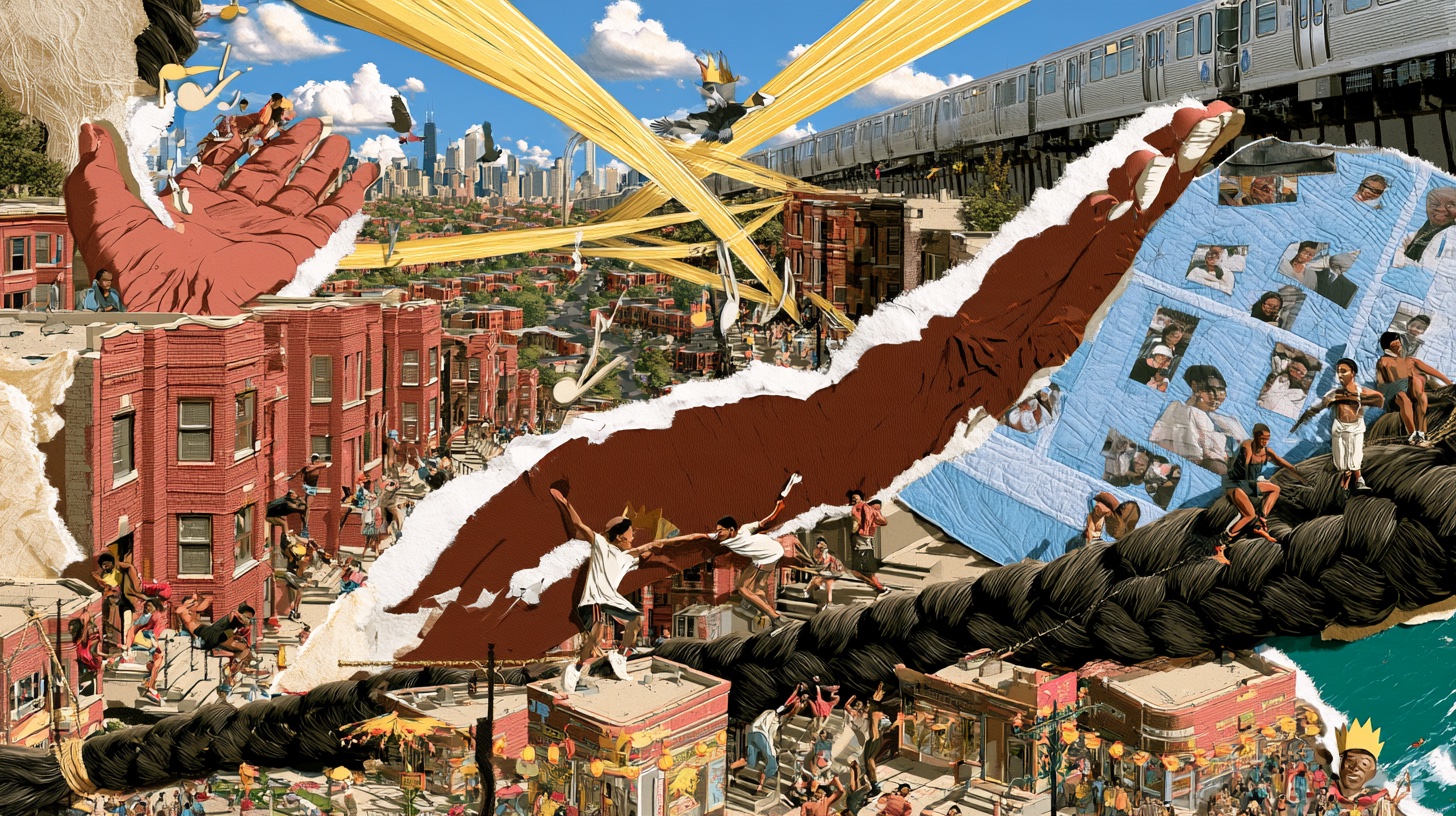
Neighborhood edit
Eight neighborhoods where food, art, music and good streets overlap right now. Each one is its own place, with its own regulars, so give it the whole afternoon.
Home turf for Kasama's Filipino bakery-by-day, tasting-menu-by-night duality — one of the hardest reservations in the city, and worth the planning.
Book Kasama's dinner service weeks out; walk in for the daytime bakery instead if you can't get a table.
Kyōten anchors a dining scene that keeps getting harder to book; Avondale's momentum is less photographed and more lived-in.
Pair a Logan Square dinner with a record-store afternoon — this corridor rewards slow wandering.
Green Mill's jazz room and TimeLine's now-permanent Uptown home make this one of the city's most underrated culture corridors.
Book a TimeLine show, then walk to the Green Mill for the late set.
The National Museum of Mexican Art, 18th Street's galleries, and Thalia Hall's music calendar make this a full day, not a quick stop — and it is not Little Village.
NMMA → Café Jumping Bean → 18th Street galleries → dinner → Thalia Hall is a complete, walkable day.
Vital Chinatown's retail scene and the neighborhood's food corridor sit right next to Bridgeport’s art-center scene — two distinct identities sharing a border.
Joong Boo Market and a Chinatown snack run pair well with a Bridgeport Art Center detour.
Seminary Co-op, 57th Street Books, the Silver Room, and and the Obama Presidential Center anchor one of the city's strongest South Side days.
Do the Seminary Co-op and 57th Street Books in the morning, the Obama Presidential Center after lunch, and the Silver Room on the way out.
The DuSable Black History Museum and the South Side Community Art Center carry real weight here, and the neighborhood’s history is on every block.
Pair the DuSable with the South Side Community Art Center in one afternoon, and check both hours before you go.
Indispensable for architecture, museums, Broadway, the Goodman, luxury shopping, and holiday spectacle — one chapter, not the entire story.
Use Downtown as a bookend to a neighborhood day, not the whole itinerary.
Keep going
 KEEP
KEEPMake a night of it. Find a show, a table or your next neighborhood detour.
Book-first tables, $30-and-under spots, slow mornings with coffee and pastry, and six sides of after-dark music.
Storefront theater, big rooms, neighborhood shopping rows, and the institutions and people shaping Chicago art right now.
Autumn events, holiday traditions, ready-made itineraries, what's hot vs. hype, what's coming next, and the fine print.
More depth / Checked October 4, 2026
Named shows, dance, museums, experimental spaces, editorial in/out, public transit, safety, and practical Q&A.
Open the Field Guide ↗People, connection and a reason to get out into the world.

Movement, good food, quieter nights and private support when you want it.
Explore Health & Soul ↗
The city is the experience. Your screen can wait.

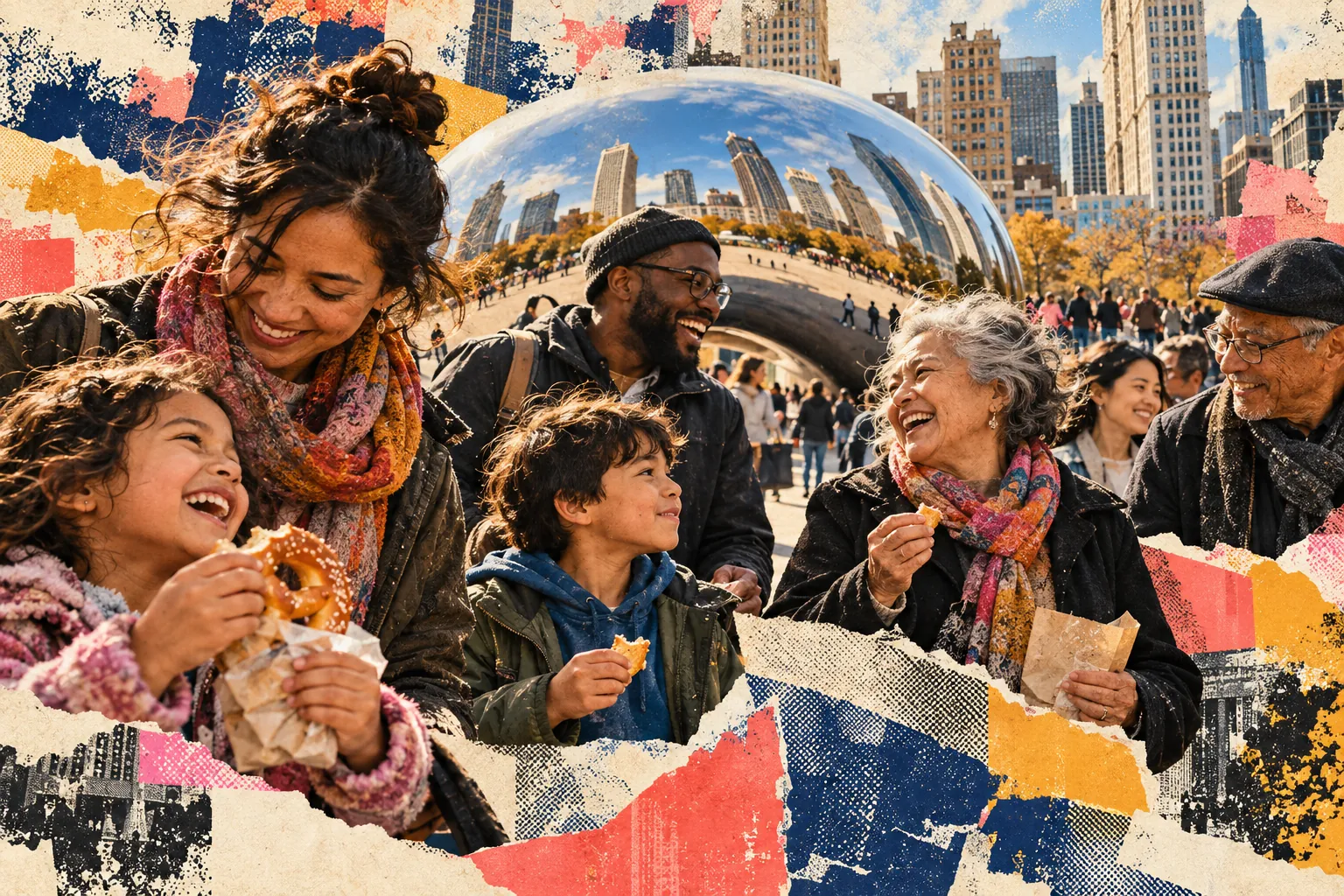
Choose an anchor and keep time for a bookstore, a bakery, or a conversation.
You can be a visitor and still be good company. No fake accent required.
Make space, support the room, and listen to the people who know it.
Step aside to check your route. The sidewalk has other plans.

Shoes you can walk in, a useful layer, and whatever makes you feel like yourself.
Ask a specific question: a bookshop, a small music room, or a good nearby bite?
Check the forecast before heading out. Your outfit can have a supporting cast.
Pair a cultural stop with a neighborhood meal. Add a walk and a bench break. Nobody awards points for rushing.

Look up, take your time, and leave room for real encounters.
Chicago artwork by Kevin Halstead · Surreal editorial interpretations of the city.
“Pick an anchor. Add a meal. Leave room for the stop you did not plan.”
The city has authors. Meet the people shaping its culture, public life, and imagination—then keep going through the full 50-person index.
Poetry · Historical foundations
Brooks made ordinary South Side lives central to American poetry. Annie Allen is a place to start; the people behind the poems are the point.
Why they matterNeighborhood life belongs in the literary canon.
Related place / contextBronzeville
Theater · Historical foundations
Hansberry turned housing, race, and family ambition into A Raisin in the Sun. Her Chicago upbringing and queer life widen the story beyond a Broadway milestone.
Why they matterThe city’s housing struggles became world theater.
Related place / contextWoodlawn / South Side
Community / reform · Historical foundations
Addams co-founded Hull-House as a practical response to immigrant families’ needs. Education, labor organizing, and public culture belonged under the same roof.
Why they matterSocial infrastructure can be cultural infrastructure.
Related place / contextHull-House / Near West Side
Journalism / civil rights · Historical foundations
Wells used reporting to challenge lynching and built organizations in Chicago. Her legacy asks what a publication owes the people it describes.
Why they matterResearch has consequences beyond the printed page.
Related place / contextBronzeville
Labor / organizing · Historical foundations
Parsons linked worker organizing with radical public speech. Chicago’s labor history becomes harder to flatten when her voice is in it.
Why they matterThe eight-hour-day story has more than one protagonist.
Related place / contextHaymarket / West Side
Literature · Historical foundations
Wright’s Chicago years helped shape Native Son and his accounts of racism. Read him alongside the city’s migration and housing histories.
Why they matterA novel can expose the machinery of a city.
Related place / contextSouth Side
Chicago Architecture Center / South Side Community Art Center
A conversation about preserving and expanding a foundational Bronzeville Black arts institution. Watch for the connection between a building, its artists, and the community that gives it meaning.
WTTW
Journalism, organizing, and a refusal to look away. This documentary follows Wells’s life and the work that helped shape Chicago’s civic history.
WTTW
A public-space history lesson with the lake doing most of the scene-setting. Look beyond the skyline to the decisions that made this shoreline part of everyday city life.
Keep following the thread in another city.
 Do’s & Don’ts
 Q&A / Ask away.
 DIY / Make it yours.