Skip to content
SEENNYC

UPCOMING EVENTS

Loading upcoming events…

All NYC events ↗

Illustrative NY City street-culture artwork
Five boroughs. A thousand overlapping worlds.
01 / The 2026 Index

Five boroughs.
Zero chill.

Follow the neighborhoods that make culture: tenement storefronts, warehouse floors, diaspora food corridors, brownstones, and working waterfronts.

Downtown / Uptown

Manhattan

The Lower East Side, East Village, Chinatown, and West Village connect independent fashion, small dining rooms, and performance spaces. Harlem anchors Black cultural heritage; Midtown and the Upper West Side hold major theatrical and civic institutions.

Lower East Side. Tenement Museum ↗ apartment and walking tours put migration, homes and working lives behind the storefronts. Book a specific tour. Add Russ & Daughters ↗ for smoked fish or Katz’s ↗ for pastrami; these are different food traditions, not interchangeable “New York sandwiches.”

Village / East Village. Stonewall Visitor Center ↗ supplies historical context before a Christopher Street wander. The Public ↗ makes theater the evening anchor. Follow the existing culture guide for smaller stages rather than assuming Broadway explains every room.

Midtown / Upper East Side. At MoMA ↗, start with Van Gogh’s The Starry Night; at The Met ↗, the Temple of Dendur rewards attention to its carvings, not just its scale. Check current display and choose a few galleries. Museum stamina is not a competitive sport.

Harlem. The Studio Museum ↗ centers artists of African descent. The Apollo ↗ adds performance and music; read the ticket’s venue, including the Victoria stages. Give the neighborhood a whole afternoon instead of a token detour.

Lower Manhattan. The African Burial Ground ↗ makes the city’s Black history unavoidable and specific. Pair historical interpretation with a slow downtown walk; a memorial deserves attention, not a checklist tick.

Build a day. Downtown history → a local meal → Village theater is one route. A museum → Central Park → Harlem is another, with transit between distant stops. Use the MTA trip guide ↗ and the SEEN calendar. All of Manhattan is not one walk.

THE MOVE Walk it. Your taxi budget has better things to do.

Studios / Streets / Waterfront

Brooklyn

Williamsburg and Greenpoint mix retail and hospitality. Bushwick and East Williamsburg turn industrial spaces into music and art venues. Red Hook keeps a maritime identity; Bed-Stuy and Crown Heights connect brownstones and Caribbean foodways.

THE MOVE One neighborhood, a whole afternoon. Brooklyn is not a single stop.

Diaspora / Dance / Dining

Queens

Jackson Heights and Flushing reward neighborhood-scale food exploration. Long Island City pairs high-rise growth with contemporary arts. Ridgewood and Maspeth connect directly to the Brooklyn club and creative corridor.

THE MOVE Come hungry. Your usual order can sit this one out.

Music / Heritage / Reuse

The Bronx

Hip-hop history, Grand Concourse Art Deco, and Arthur Avenue’s Italian-American food institutions sit alongside the changing industrial waterfronts of Mott Haven and Port Morris.

THE MOVE Buy something from the bakery. Architecture appreciation burns calories.

Maritime / Gardens / Sri Lanka

Staten Island

Start on the North Shore: St. George, Tompkinsville, and Stapleton. Sri Lankan foodways meet maritime heritage, while Snug Harbor brings botanical landscapes and historic architecture into the cultural map.

Official site / current details ↗

THE MOVE Cross the harbor. Manhattan will cope.

House rules / Be decent. Stay interesting.

Don’t.
Just don’t.

New York has enough characters. Be good company.

Do not block the sidewalk.

Your group chat can regroup somewhere that is not the middle of a working city.

The neighborhood is not your set.

Visit the shops. Pay for the food. Ask before photographing people. A community is more than your next post.

Check the door. Check the train.

Tickets, hours, house policies, and late-night service matter. “But the internet said” is a weak opening line.

City life. Shared.

People, connection and a reason to get out into the world.

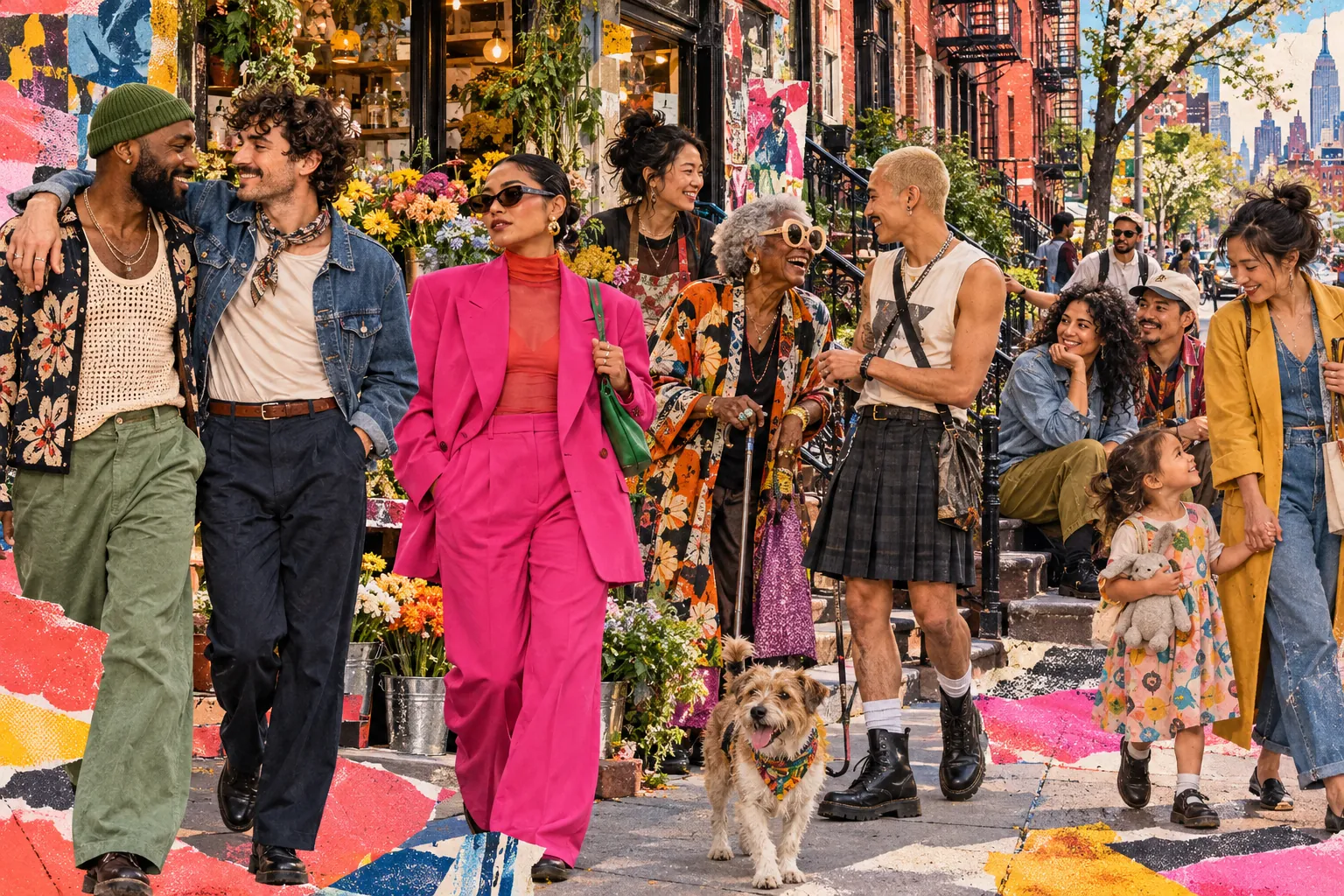
Collage illustration: an East Village sidewalk full of people, color and fire escapes.
SEEN artwork · Kevin Halstead

A place at the table.

Surreal collage of restaurants, tables and food
SEEN artwork · Kevin Halstead

The edit

NYC
RIGHT NOW.

“Pick an anchor. Add a meal. Leave room for the stop you did not plan.”

Body. Soul. Your pace.

Movement, good food, quieter nights and private support when you want it.

Explore Health & Soul ↗

Your next stop

Follow a different thread.

MORE LIKE THIS

Keep following the thread in another city.

PEOPLE MAKING THE CITY INTERESTING

The city has authors. Meet the people shaping its culture, public life, and imagination—then keep going through the full 50-person index.

Urbanism / neighborhoods · Historical foundations

Jane Jacobs

Jacobs argued for the intelligence of lived-in streets and mixed neighborhoods. Her New York work challenges plans that treat residents as obstacles.

Why they matterThe sidewalk contains knowledge a master plan can miss.

Related place / contextGreenwich Village

Planning / contested legacy · Historical foundations

Robert Moses

Moses reshaped New York through enormous infrastructure projects. Displacement, racial inequality, and public power belong beside the record of construction.

Why they matterA project’s scale is not the same as its public benefit.

Related place / contextCitywide parks, highways, and public works

Politics / education · Historical foundations

Shirley Chisholm

Chisholm joined education and organizing with a groundbreaking congressional career. Her Brooklyn base connects national political history with neighborhood representation.

Why they matterThe people excluded from power can change its expectations.

Related place / contextBedford-Stuyvesant / Brooklyn

Civil rights / LGBTQ history · Historical foundations

Bayard Rustin

Rustin helped organize major civil-rights campaigns while facing exclusion as a gay man. His New York life makes organizational labor part of the history.

Why they matterMovements need the people who make collective action possible.

Related place / contextHarlem / Chelsea

LGBTQ / community · Historical foundations

Marsha P. Johnson

Johnson helped sustain queer street life and mutual support in New York. Her work with Rivera connects liberation with the practical needs of homeless youth.

Why they matterCare and protest belong in the same history.

Related place / contextGreenwich Village

LGBTQ / community · Historical foundations

Sylvia Rivera

Rivera organized for people pushed aside within both society and liberation movements. Her work insists that housing and safety are part of queer freedom.

Why they matterA movement must account for the people it leaves outside.

Related place / contextGreenwich Village / STAR history

Explore all 50 people making NYC interesting →

WATCH NYC IN MOTION

Virtual Visit: Joseph and Rachel Moore’s Apartment

Tenement Museum

Meet Black New Yorkers living in an 1860s rear tenement in what is now SoHo. The museum reconstructs a household and its neighbors to make everyday history visible.

In Search of Home: LGBTQ+ Refugees in NYC

Tenement Museum

Edafe Okporo and John Washington discuss refuge, housing, and belonging. This archived 2019 conversation connects LGBTQ history with the ongoing question of who can find a home in New York.

ALL CITIES

EXPLORE

CULTURE

FOOD & DRINK

CITY LIFE

FROM SEEN

ABOUT

NYC MENU