
 Don't.
Body. Soul. Your pace.
Movement, good food, quieter nights and private support when you want it.
Explore Health & Soul ↗Worth knowing
 The 2026 Index
Detroit's energy is no longer concentrated in one comeback district. Eight signals defining the region right now — ranked by nobody, argued about by everybody.
Genuinely rising. Michigan Central reports more than 240 companies, over 250,000 campus visitors in 2025, and more than 70 nearby investment projects feeding neighborhood businesses like Honey Bee Market and Folk.
Walk the public grounds before sunset, then circle back after dark — the lit-up Station reads best from the plaza, not a car window.
Detroit's most dependable mixed-use cultural day — museum, university, coffee, theater and dinner without constantly driving. MOCAD reopened in April 2026 after an eight-month renovation; Wayne State welcomed more than 24,000 students.
Pair a DIA visit with Café Sous Terre's evening vinyl set — one ticket, two different Midtowns.
Enduring and evolving. Tacos Wuey opened in 2025 and became one of 2026's nationally noticed restaurants; El Club remains an intimate all-ages arts venue on Vernor.
Go on a weeknight — weekend lines run long and the kitchen's at its best unrushed.
Emerging and dispersed. The Shepherd, Charles McGee Legacy Park, Lantern and future Stanton Yards form a cultural corridor across three east-side neighborhoods.
Check The Shepherd's event calendar before driving out — gallery hours and performance nights don't always overlap.
Culturally essential. The Yemeni coffeehouse is Dearborn's defining contemporary venue — alcohol-free, intergenerational, and one of Metro Detroit's clearest locally created cultural exports. Qahwah House leads the pack.
Order qishr or Adeni chai, not just coffee — it's what regulars actually order.
Still hip, no longer "discovered." The Magic Bag and DIY Street Fair remain regional favorites; organic, inclusive, and now an established inner-ring destination rather than a secret.
Nine Mile Road rewards walking, not circling for parking — garage up once and stay on foot.
Small but influential. Javier Bardauil's live-fire Barda earned another James Beard semifinalist mention in 2026, making this a dining-and-art destination rather than a full walkable district yet.
Barda and Puma sit close together — book one seating, walk the block between courses.
Enduring creative anchor. Still culturally important, especially during Saturdays, Eastern Market After Dark and food/beer events — murals, breweries and design events keep it from feeling decorative.
Saturday mornings are for wholesalers and locals — After Dark events are the better bet for lingering.
Regional geography
Metro Detroit isn’t a downtown with suburbs attached. It’s a string of real places, and Woodward Avenue ties them together, from Downtown through Midtown, New Center, Ferndale, Royal Oak, Berkley and Birmingham to Pontiac.
Established, corporate
Hudson's office/retail component is real and active, with the EDITION hotel and residences announced for 2027. Visually stronger and busier, but national retail and event-driven traffic make it less revealing of everyday Detroit culture than neighborhood corridors.
Best for: Sports, theater, architecture, visitors
Culturally essential
Dearborn-founded Qahwah House, Qamaria Coffee and Haraz Coffee House collectively reached 121 locations in 14 states by August 2026 — the coffeehouse is an alcohol-free, intergenerational third space as much as a consumer brand.
Best for: Yemeni coffee, halal food, late-night socializing
Enduring, rough-edged, global
Polish Village Café remains a reference point, but the city's present-day identity is broader — Yemeni, Bangladeshi, Polish and Balkan communities overlap. Rewards targeted venue planning more than casual strolling.
Best for: Affordable food, dive bars, small shows
Popular, mature
Arts, Beats & Eats and a dense downtown sustain crowds; a new pedestrian plaza (romi.gov) improves public space. More mainstream and occasion-driven than Ferndale, but not fading.
Best for: Broad nightlife, festivals, group plans
Event-led rebound
The Crofoot and Elektricity give downtown genuine nighttime relevance, though the district is less consistently activated between events than Ferndale or Royal Oak. SMART serves it with Woodward routes and Flex microtransit.
Best for: Concerts, ticketed shows, Dream Cruise
Design-conscious
Barda and Puma make this a dining-and-art destination rather than a full walkable district yet — small, but an influential pocket of Detroit's creative economy.
Best for: Live-fire dining, small galleries
Polished, affluent
Polished, affluent and dining-oriented — Wilder's represents current suburban fine-dining momentum, less underground than Ferndale but reliably excellent.
Best for: Luxury retail, fine dining
Architecture, calm
Best for architecture, lakefront calm and multigenerational outings — High Pointe Burger Jointe represents current casual momentum alongside the estate-and-lakefront pace.
Best for: Architecture, lakefront, families
The cultural and economic relationship between Detroit proper and its suburban periphery has evolved into a complementary dynamic — core investments in mobility hubs, universities and commercial real estate generate spillovers across county borders, while suburban culinary and creative hubs add to the region's cultural density.
Transportation bottom line: the Woodward spine — downtown, Midtown and New Center — is workable with QLINE, DDOT and MoGo. SMART FAST improves access to Ferndale, Dearborn and Pontiac, but a car remains useful for Grosse Pointe, Birmingham, Hazel Park and multi-stop restaurant nights.
Know your corridors
 The Woodward
One main artery, two side branches. Memorize this and you'll never again get talked into "bar-hopping" three suburbs in one night.
Schematic, not to scale — drawn for orientation, not for driving directions. Blue = Michigan Avenue corridor (Corktown → Dearborn). Pink = Jefferson Avenue corridor (East Village → Grosse Pointe). Black spine = Woodward Avenue (Downtown → Pontiac).
Keep going
The Index is the appetizer. Here's where the rest of the research lives.
James Beard winners, coffee culture, techno clubs, and the underground speakeasies nobody will text you the address for.
Little Village's four pillars, the Avenue of Fashion, and what 24,000 Wayne State students actually do after class.
Newlab's deep-tech startups, GM's move back to Woodward, and the 2026–2028 construction watchlist.
What's hip, what's not, who's who, two videos worth your data plan, and every source I used to back it up.
House rules
A few ways to have a better time — and be better company while you're at it.
Leland City Club's historic building went dark, and "City Club in Exile" events were operating at alternate venues in 2026 — check a venue's own page before you drive out.
National brands and event-driven traffic make Downtown visually stronger and busier, but the neighborhood corridors — Corktown, East Warren, Livernois, Dearborn — are where 2026's actual momentum lives.
Detroit Opera House and Little Caesars Arena offer sensory-inclusive programs, but verify each event's age policy and accessibility before you buy.
Corktown, Midtown, Southwest, Dearborn and East Warren are each strongest for something different right now — pick a lane per trip instead of chasing all of them in one day.
Ferndale, Royal Oak, Birmingham and Pontiac each want a dedicated night out, not a single driving loop — trying to hit all of them wastes time and usually requires a car anyway.
The Woodward spine is genuinely workable on QLINE, DDOT and MoGo — but Grosse Pointe, Birmingham, Hazel Park, suburban campuses and multi-stop restaurant nights still need one.
More depth / Checked October 4, 2026
 The Detroit Field Guide
Named shows, dance, museums, experimental spaces, editorial in/out, public transit, safety, and practical Q&A.
Open the Field Guide ↗People, connection and a reason to get out into the world.
Movement, good food, quieter nights and private support when you want it.
Explore Health & Soul ↗
The city is the experience. Your screen can wait.
Let Detroit’s music, makers, and people tell their own stories.
Ask before photographing people. Respect homes, studios, and working spaces.
Buy the record, order something, and tip the people looking after you.
Your elbows did not buy a separate ticket.
Choose one neighborhood, one cultural stop, and one meal. Let the day grow from there.

Ask the person or staff first. A camera is not an access pass.
Leave room for everyday Detroit—not just the story you arrived with.
Pick a record shop and a nearby meal from the guide. Ask for a listening recommendation. Build your own soundtrack.

Look up, take your time, and leave room for real encounters.
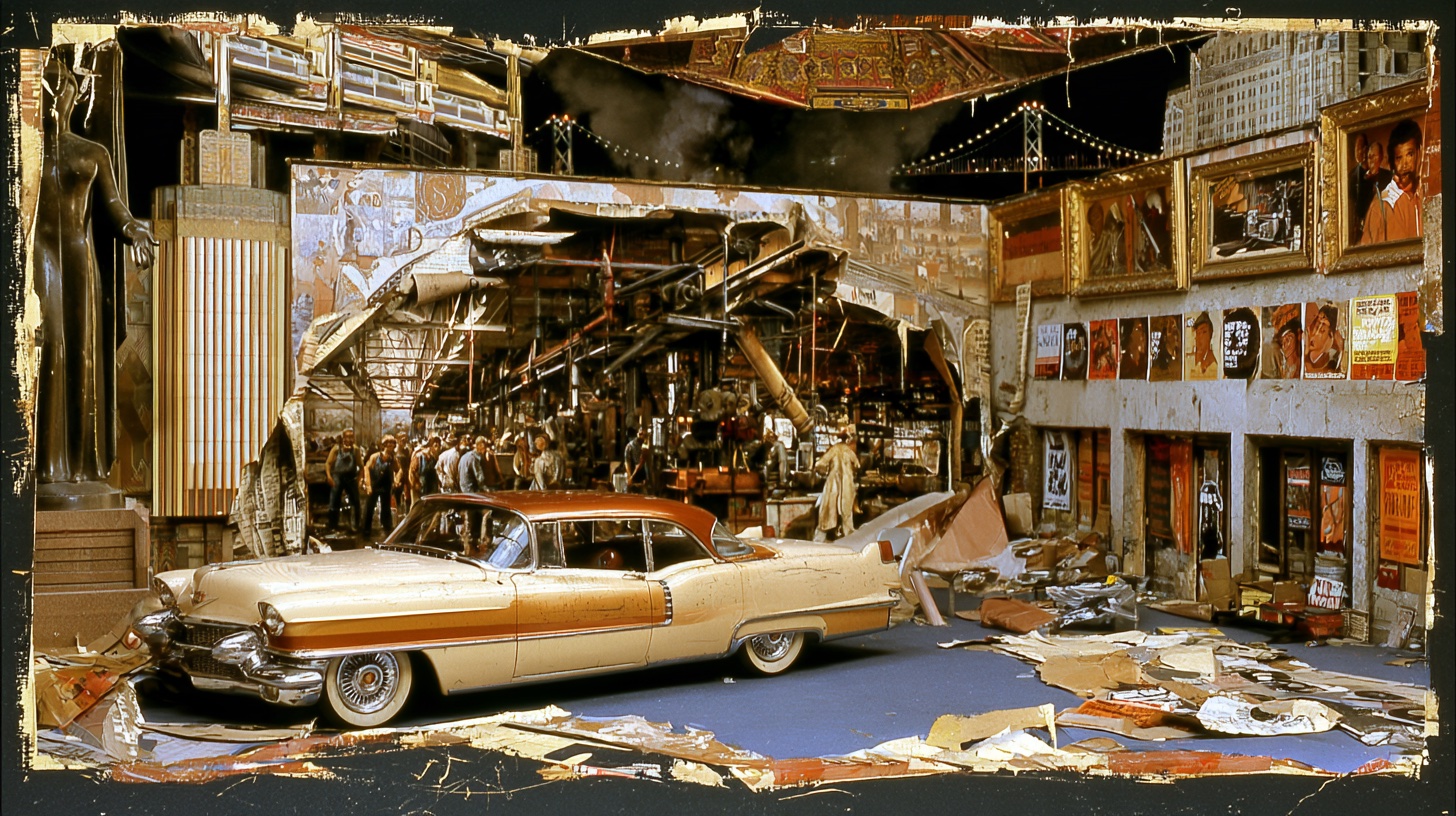
Detroit artwork is AI-generated illustration supplied by Kevin Halstead; it does not document the named venues, people, or events.
“Pick an anchor. Add a meal. Leave room for the stop you did not plan.”
The city has authors. Meet the people shaping its culture, public life, and imagination—then keep going through the full 50-person index.
Philosophy / organizing · Historical foundations
Boggs made Detroit a base for thinking about social change through everyday community work. Her organizing connected civil rights, labor, feminism, and environmental questions.
Why they matterIdeas become useful when neighbors can act on them.
Related place / contextBoggs Center / East Side
Labor / philosophy · Historical foundations
James Boggs wrote from the experience of Detroit factory work and political organizing. His analysis treated technological change as a question about people and power.
Why they matterThe assembly line also produced political thought.
Related place / contextBoggs Center / East Side
LGBTQ community · Historical foundations
Ellis opened her Detroit home to Black LGBTQ people who needed community. Her example connects queer history with hospitality, chosen family, and practical support.
Why they matterA safe room can become a lasting civic legacy.
Related place / contextRuth Ellis Center / Highland Park
Civil rights · Historical foundations
Parks’s Detroit years extended far beyond the Montgomery bus boycott. Her work and life here connect civil-rights history with northern inequality and community activism.
Why they matterA famous moment is never the whole life.
Related place / contextDetroit residence / Rosa Parks Institute
Civil rights · Historical foundations
Malcolm X’s Detroit connections belong to his religious and political development. They also connect the city to wider arguments about racial justice and self-determination.
Why they matterDetroit participated in national movements, not just industry.
Related place / contextNation of Islam’s Detroit history
Civic history · Historical foundations
Young became Detroit’s first Black mayor after a career in labor and politics. His legacy belongs with debates about representation, economic change, and governing a divided region.
Why they matterPolitical milestones require a city-sized context.
Related place / contextCity Hall / Black Bottom roots
Detroit Historical Society
An archival reel with rare views of Hastings Street, Eastern Market, and the Brewster projects. These are historical streetscapes, not a present-day walking route.
Detroit Historical Society
Festival footage preserves a moment in Detroit electronic music history, including K-Hand and conversations with techno’s foundational figures. Follow the archive’s chapter links for particular performances and interviews.
Keep following the thread in another city.


 Q&A / Ask away.
 DIY / Make it yours.